

Formulating an Anti-Acne Series: A Guide to Private Label Blemish Control

Introduction
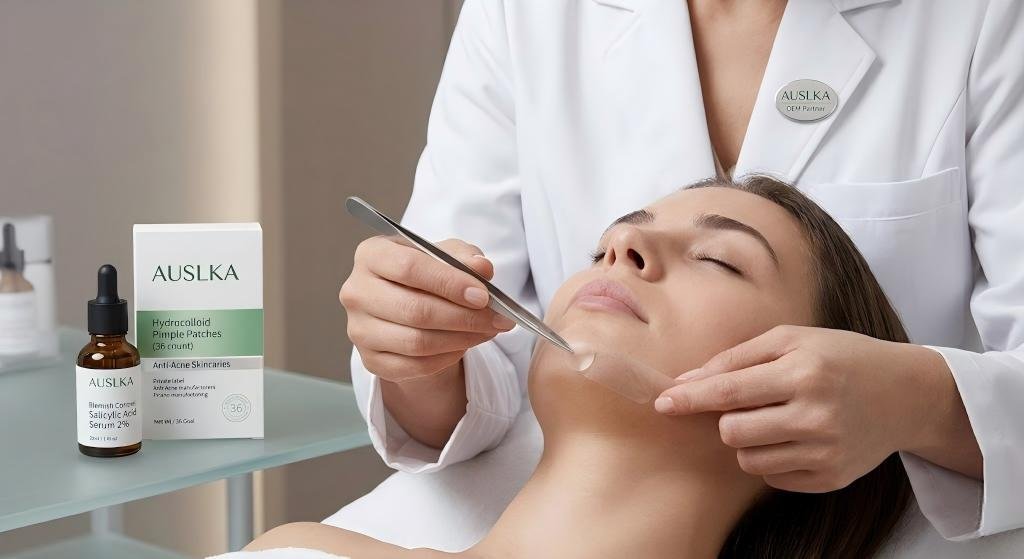
In clinical dermatology, practitioners continuously combat severe cystic breakouts and harsh barrier damage exacerbated by ineffective over-the-counter treatments. To systematically eradicate these profound dermatological pain points, partnering with an advanced anti-acne series OEM is absolutely essential for medical spas and specialized skincare brands seeking to launch high-efficacy blemish control protocols.
Historically, mass-market acne treatments relied on aggressive, rudimentary chemical mechanisms—such as high-concentration isopropyl alcohol and unbuffered Benzoyl Peroxide. While these archaic formulations temporarily neutralize the Propionibacterium acnes (C. acnes) bacteria, they simultaneously strip the epidermis of its vital intercellular lipids. This initiates a catastrophic cycle of trans-epidermal water loss (TEWL), localized erythema, and reactive sebum overproduction. To mathematically interrupt this cycle of barrier degradation, cosmetic chemists must engineer sophisticated, biocompatible solutions that balance aggressive comedolytic action with intense dermal repair.
Developing a highly stable Anti-Acne Series requires rigorous adherence to biochemical thermodynamics and active ingredient pH stabilization. In this comprehensive B2B technical guide, we will aggressively deconstruct the molecular penetration mechanics of chemical exfoliants, evaluate the hydrocolloid polymer structures utilized in advanced spot treatments, and detail exactly how partnering with a specialized blemish control cosmetics ODM guarantees your brand delivers clinical-grade efficacy without compromising the structural integrity of the human skin barrier.
Core Chemical Exfoliation & Antibacterial Advantages


To objectively comprehend the clinical superiority of modern blemish treatments, formulation engineers must deeply analyze the molecular geometry and solubility parameters of chemical exfoliants. Alpha Hydroxy Acids (AHAs), such as glycolic and lactic acid, are strictly water-soluble (hydrophilic). They operate exclusively on the superficial stratum corneum, severing the desmosome bonds between dead corneocytes to accelerate cellular turnover. However, because AHAs cannot penetrate lipid-rich environments, they are fundamentally incapable of dissolving oxidized sebum trapped deep within the pilosebaceous unit.
Conversely, Beta Hydroxy Acid (BHA), specifically Salicylic Acid, possesses an inherently lipophilic (oil-soluble) molecular structure. This allows a meticulously formulated salicylic acid skincare private label serum to physically bypass the aqueous surface layers and penetrate directly into the sebaceous gland. Once inside the pore, the BHA actively dissolves the hardened mixture of sebum and keratinized cellular debris (the microcomedone), delivering potent comedolytic and antibacterial efficacy directly to the site of the infection.
However, deploying aggressive chemical exfoliants mandates the simultaneous integration of highly potent, anti-inflammatory soothing mechanisms to prevent contact dermatitis. Advanced manufacturing facilities actively leverage premium botanical science to achieve this biochemical equilibrium. By sourcing exceptionally pure, subcritical fluid-extracted Centella Asiatica directly from high-altitude cultivation zones in Guizhou, China, chemists infuse the formula with massive concentrations of asiaticoside and madecassoside. These specific triterpenoid saponins rapidly downregulate pro-inflammatory cytokines in the skin while actively upregulating Type I collagen synthesis. This guarantees that as the BHA aggressively purges the pore, the Centella Asiatica immediately reconstructs the compromised dermal matrix, preventing the formation of deep atrophic acne scars.
Critical Market Applications & Real-World Use Cases
The strategic deployment of a specialized blemish control series is aggressively dictated by the clinical demands of professional dermatologists and advanced aesthetic practitioners. In the environment of high-end medical spas, practitioners frequently execute severe, controlled trauma to the skin via microneedling or deep chemical peels. Consequently, these professionals require highly specific, sterile post-procedure protocols to prevent opportunistic bacterial infections without irritating the heavily compromised epidermis.
Furthermore, these clinical operators actively collaborate with an acne serum manufacturer to prescribe customized at-home maintenance regimens. Therefore, by deploying an advanced, multi-stage OEM acne system, the clinic mathematically ensures that the patient maintains optimal sebum regulation between visits. Consequently, this significantly accelerates the healing timeline of severe cystic acne. Furthermore, this proprietary distribution model legally prevents the patient from seeking inferior, mass-market alternatives, thereby locking in continuous, high-margin retail revenue for the aesthetic clinic.
Therefore, specialized skincare brands targeting Gen Z and millennial demographics leverage this exact OEM infrastructure to rapidly dominate the direct-to-consumer (DTC) market. Consequently, when a specific active ingredient trend surges on social media, these agile brands utilize their ODM partner to rapidly scale the production of highly visual, highly effective hydrocolloid patches. Furthermore, because the OEM factory handles the strict cleanroom manufacturing and primary blister-pack assembly, the digital brand owner can remain hyper-focused on aggressive customer acquisition. Therefore, this strategic outsourcing mathematically isolates the brand from the immense capital expenditures required to establish aseptic medical device manufacturing facilities.
Comparison Table: Blemish Treatment Modalities
To objectively evaluate the clinical and structural viability of varying acne treatments, cosmetic engineers must critically analyze the biochemical deployment data. The following 4-column table mathematically contrasts Advanced Hydrocolloid Patches & Serums against archaic industry alternatives across critical dermatological performance metrics.
| Treatment Modality | Barrier Health Impact & Hydration | Healing Speed & Exudate Absorption | Hyperpigmentation (PIH) Reduction |
| Hydrocolloid Patches & BHA Serums | Supreme. Maintains moist wound healing environment; prevents TEWL. | Extremely Fast. Hydrocolloid physically absorbs pus; BHA dissolves core. | Excellent. Centella prevents melanin overproduction during trauma. |
| Harsh Benzoyl Peroxide (BPO) | Terrible. Generates massive free radicals; severely strips intercellular lipids. | Moderate. Kills bacteria quickly but causes extreme peeling and crusting. | Poor. The severe inflammation actively triggers post-inflammatory erythema. |
| Drying Astringents (Alcohol-Based) | Catastrophic. Instantly denatures skin proteins and destroys the acid mantle. | Slow. Only treats the surface; causes reactive sebum overproduction. | Very Poor. Dehydrated skin heals slower, leaving darker, lasting scars. |
| Topical Antibiotics (Clindamycin) | Moderate. Safe for barrier, but strictly alters the skin microbiome. | Fast initially, but highly prone to developing antibiotic-resistant bacterial strains. | None. Requires secondary chemical exfoliants to address residual pigmentation. |
Formulation Best Practices & Clinical Specs
Executing a flawless commercial launch of an acne treatment line requires absolute adherence to biochemical thermodynamics and strict pH stabilization. The most critical engineering parameter in a BHA serum is the calculation of the ‘free acid value’ (pKa). Salicylic acid has a pKa of 2.97. For the acid to remain biologically active and capable of penetrating the lipid barrier, the serum must be mathematically buffered to a final pH between 3.5 and 4.0. If an amateur chemist formulates the serum with a pH of 5.5, the salicylic acid will become completely ionized (neutralized), rendering it chemically inert and completely useless as an exfoliant. A premier custom acne treatment factory strictly utilizes advanced sodium citrate buffers to lock the pH precisely within this highly active window.
Furthermore, engineering the physical architecture of a pimple patch requires profound mastery over medical-grade polymers. A professional Pimple patch manufacturer constructs these micro-dressings using advanced carboxymethyl cellulose (CMC) suspended in a biocompatible polyisobutene adhesive matrix. When this specific polymer structure contacts biological exudate (pus and serum), it initiates a rapid phase change, swelling into a white gel that physically extracts the infection via osmotic pressure. The manufacturer must mathematically calibrate the adhesive tensile strength: it must be strong enough to withstand 12 hours of sleep friction, yet gentle enough to peel away without ripping the newly formed, hyper-fragile epithelial cells from the healing comedone.
Finally, every secondary ingredient within the acne series—from the emulsifiers in the moisturizer to the pigments used if the brand integrates the active ingredients into a specialized foundation—must undergo rigorous comedogenic rating testing. The laboratory must physically evaluate the raw materials to guarantee they score a ‘0’ on the comedogenic scale, ensuring the formulation absolutely cannot induce microcomedone formation under extended occlusive wear.
Frequently Asked Questions (FAQ)
- What is the maximum legal concentration of Salicylic Acid permitted in OTC acne products?
According to global regulatory frameworks, including the US FDA monograph for topical acne products and the EU Cosmetics Regulation, Salicylic Acid is strictly limited to a maximum concentration of 2.0% for leave-on products (serums, creams) designed for facial application. Exceeding this limit classifies the product as a prescription pharmaceutical.
- How does the OEM factory formulate BHA serums for hypersensitive or rosacea-prone skin?
To prevent severe erythema in sensitive demographics, cosmetic chemists utilize advanced molecular encapsulation. By wrapping the Salicylic Acid in a slow-release lipid or cyclodextrin shell, the active ingredient is released into the epidermis gradually over 6 to 8 hours, completely neutralizing the sudden spike in dermal pH that causes chemical burns and irritation.
- Can you infuse active ingredients directly into the hydrocolloid pimple patches?
Yes, this is a highly advanced ODM capability. Through precision micro-dosing technologies, the factory can impregnate the polyisobutene adhesive matrix with synergistic lipophilic actives—such as Tea Tree Oil, micro-encapsulated Retinol, or Niacinamide. These actives are then systematically delivered into the open wound as the hydrocolloid absorbs the exudate.
- What are the standard physical dimensions and thicknesses available for OEM pimple patches?
Commercial OEM factories typically provide multi-diecut sheets. Standard diameter sizes include 8mm, 10mm, and 12mm to accommodate varying comedone volumes. The architectural thickness is critical: ‘Daytime’ patches are aggressively milled down to an ultra-thin 0.1mm with tapered edges for invisible makeup application, while ‘Nighttime’ patches are left at 0.3mm to maximize the osmotic absorption capacity of the CMC polymers.
- How do we test to ensure our acne moisturizer does not break the customer out?
A premier OEM facility will conduct rigorous in-vivo non-comedogenic clinical trials. This involves applying the finished formulation to the backs of human volunteers under occlusive patches for several weeks. Dermatologists then utilize cyanoacrylate follicular biopsies to mathematically count the number of microcomedones formed, certifying the product as definitively non-acnegenic.
- What is the biochemical difference between ‘skin purging’ and a reactive breakout?
Skin purging is a mathematical acceleration of the epidermal turnover cycle caused by active keratolytic agents (like AHAs, BHAs, or Retinoids), forcing pre-existing microcomedones to the surface simultaneously. It typically resolves within 28 days. A reactive breakout is an inflammatory immune response caused by comedogenic occlusives or barrier-destroying irritants, characterized by continuous, painful cysts in new areas.
Conclusion
The engineering reality within clinical dermatology is irrefutable: attempting to launch an effective blemish solution without the rigorous biochemical infrastructure of a professional manufacturing partner guarantees catastrophic barrier failure and brand rejection. By migrating your brand’s production to a precision-engineered anti-acne series developed by an elite OEM facility, you permanently mathematicalize your product’s safety, stability, and clinical efficacy. You guarantee absolute pH stabilization, eradicate the threat of comedogenic contamination, and unlock rapid speed-to-market for your entire therapeutic catalog.
Do not compromise your patients’ dermal health with substandard, abrasive formulations. Whether you are seeking to launch an advanced spot treatment line or require a high-throughput manufacturing partner to integrate acne-safe technology into a Makeup Series, explore the immense capabilities of our GMPC-certified infrastructure. To understand our 30-year legacy of clinical formulation excellence, visit About Us. Secure your clinical dominance by upgrading your supply chain today. Contact the formulation engineers at Auslka to receive a customized thermodynamic formulation audit, and fundamentally revolutionize your beauty brand’s trajectory.