

Color Cosmetics ODM: How to Launch Your Custom Makeup Series

Introduction

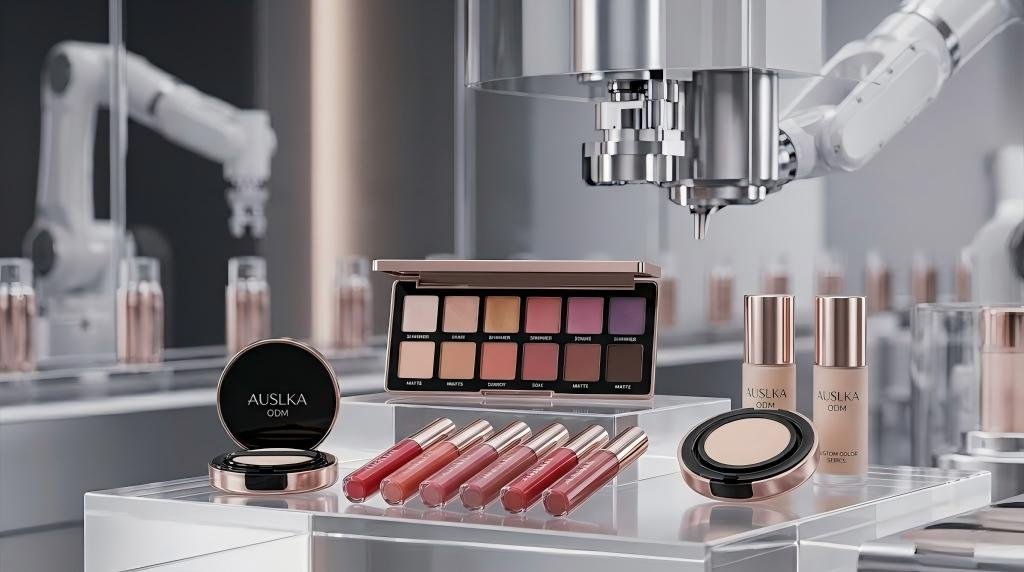
In the hyper-competitive global beauty market, launching a profitable makeup brand is frequently derailed by severe chemical and supply chain pain points. Independent founders are continuously paralyzed by inconsistent pigment payoff, catastrophically crumbling pressed powders, and astronomically high minimum orders demanded by legacy factories. To mathematically eradicate these immense electromechanical and financial liabilities, partnering with a specialized color cosmetics ODM is the definitive engineering solution for rapidly scaling beauty brands seeking uncompromising quality.
Unlike basic skincare emulsions, color cosmetics require profound mastery over pigment micronization, dry-binder thermodynamics, and volatile film-forming polymers. Attempting to formulate a high-adhesion liquid lipstick or an ultra-pigmented multi-chrome eyeshadow palette without access to industrial-grade triple-roller mills or automated powder presses guarantees catastrophic product failure. Furthermore, the modern consumer is brutally discerning; a single batch of chalky, poorly blended eyeshadow can instantly destroy a brand’s reputation and trigger massive retail returns.
To bypass these chemical vulnerabilities, visionary beauty founders leverage the massive technological infrastructure of an advanced Makeup series manufacturer. This comprehensive B2B technical guide will aggressively deconstruct the structural physics of wet-pressing powder technology, evaluate the molecular adhesion of long-wear film formers, and detail exactly how outsourcing your production to a premium manufacturing hub guarantees absolute color fidelity and rapid speed-to-market.
Core Pigment Technology & Binding Advantages

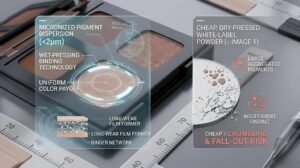
To objectively evaluate the structural superiority of professional makeup formulations, cosmetic chemists must deeply analyze the physics of pigment micronization and binder thermodynamics. The fundamental building blocks of any color cosmetic are iron oxides, titanium dioxide, and various synthetic micas. However, in their raw state, these pigments form dense, jagged agglomerations. If these unrefined pigments are simply mixed with a dry binder and pressed, the resulting eyeshadow or blush will be excessively chalky, exhibit terrible skin adhesion (fall-out), and deliver highly inconsistent color payoff.
To eradicate this physical limitation, a premier eyeshadow palette ODM utilizes advanced jet milling and triple-roller homogenization. These machines subject the raw pigments to massive kinetic shear force, mathematically crushing the particles down to a uniform, sub-micron distribution. Furthermore, advanced facilities chemically treat the surface of these micro-pigments with hydrophobic silanes or methicone. This surface treatment entirely repels human sebum, guaranteeing that the pigment will not oxidize or shift in color when it contacts the acid mantle of the consumer’s skin.
Equally critical is the technological evolution from dry-pressing to wet-pressing (or back-injection) powder technology. Traditional dry-pressed powders rely on heavy waxy binders that dull the pigment’s vibrance. In wet-pressing, the micronized pigments are suspended in a highly volatile liquid solvent matrix and injected directly into the metal pan. The solvent is then vacuum-evaporated, leaving behind a pure, ultra-creamy pigment structure with zero chalkiness. When formulating liquid products, such as in a private label lipstick factory, chemists utilize advanced film formers—like Trimethylsiloxysilicate (MQ resins). These volatile silicones evaporate upon contact with the lips, causing the remaining resin to cross-link into a highly flexible, waterproof matrix that permanently locks the micro-dispersed pigment onto the epidermis without structural cracking.
Critical Market Applications & Real-World Use Cases
The strategic deployment of advanced ODM manufacturing is aggressively dictated by the hyper-accelerated product lifecycles of the modern digital beauty space. In the era of algorithmic commerce, fast-beauty brands and massive TikTok influencers cannot afford the traditional 18-month R&D pipeline utilized by legacy conglomerates. Consequently, when a specific micro-trend—such as ultra-reflective ‘glass skin’ highlighters or duochrome graphic eyeliners—surges on social media, these digital-first brands must initiate production instantaneously to capture peak consumer demand.
Therefore, these agile founders actively partner with an advanced cosmetics contract manufacturing facility. Furthermore, by accessing an ODM’s vast library of pre-stabilized, high-performance base formulations, the influencer simply customizes the Pantone color ratios, selects the primary packaging, and immediately transitions to mass production. Consequently, this unparalleled speed-to-market allows the brand to consistently outpace competitors, mathematically maximizing the financial return on algorithmic trends.
Furthermore, professional makeup artists and niche editorial brands require highly specialized, hyper-pigmented formulations that can withstand the intense thermal stress of high-definition studio lighting. Therefore, these professionals utilize ODM partnerships to engineer custom palettes that feature massive pigment loads—often exceeding 40% active pigment—which is physically impossible to achieve in mass-market drug store formulations without catastrophic binder failure. Consequently, this strategic outsourcing completely isolates the brand from the immense capital expenditures required to establish independent cosmetic laboratories, allowing them to fund aggressive digital marketing campaigns while the factory handles the rigorous assembly and global compliance.
Comparison Table: Color Cosmetics Manufacturing Models
To objectively evaluate the structural and financial viability of varying cosmetic production models, procurement engineers must critically analyze the manufacturing data. The following 4-column table mathematically contrasts Advanced ODM Color Manufacturing against legacy industry alternatives across critical performance metrics.
| Manufacturing Model | Formula Exclusivity & Pigment Load | Fall-out Rates & Textural Quality | Trend Adaptation & Speed to Market |
| Advanced ODM Color Manufacturing | High Exclusivity. Custom pigment ratios; extreme pigment load capability. | Zero to Minimal. Wet-pressing technology ensures creamy, high-adhesion texture. | Extremely Fast (45-60 days). Agile infrastructure captures viral trends instantly. |
| Cheap White-Labeling (Off-the-shelf) | Zero Exclusivity. Low pigment load to save factory costs; identical to competitors. | High Fall-out. Uses cheap talc fillers and archaic dry-pressing methods. | Instant (Immediately available), but visually indistinguishable from competitors. |
| Manual Hand-Pressing (Indie DIY) | Absolute Exclusivity, but highly inconsistent batch-to-batch pigment load. | Variable. Lacks industrial homogenization, resulting in crumbling and chalkiness. | Terribly Slow. Physically impossible to scale rapidly during a viral sales spike. |
| Traditional OEM (Custom from Scratch) | Absolute Exclusivity. 100% proprietary formulation owned by the brand. | Supreme Quality, but requires massive R&D fees and stability testing timelines. | Very Slow (8-12 months). Highly vulnerable to missing algorithmic micro-trends. |
Production Best Practices & Quality Specs
Executing a flawless commercial launch of a color cosmetics line requires absolute adherence to structural physics and draconian heavy metal compliance. The most immediate mechanical hurdle in eyeshadow or blush manufacturing is preventing transit destruction. Pressed powders are inherently fragile. A premier vegan makeup OEM must utilize automated Drop-Test apparatuses during the quality control phase. The finished palette is mechanically dropped from a specified height (typically 1 meter) onto a steel or concrete plate, multiple times across varying angles. If the binder ratio is mathematically incorrect or the pressing PSI (Pounds per Square Inch) is too low, the powder pan will violently shatter. Formulators must continuously recalibrate the dry-to-liquid binder ratio until the product achieves total structural integrity.
Furthermore, global regulatory compliance regarding heavy metals is non-negotiable. Earth-mined pigments (such as iron oxides and micas) naturally contain trace amounts of lead, arsenic, mercury, and cadmium. The factory’s internal analytical chemistry lab must utilize Inductively Coupled Plasma Mass Spectrometry (ICP-MS) to mathematically verify that the heavy metal parts-per-million (ppm) are strictly below the draconian thresholds mandated by the US FDA and the EU Cosmetics Regulation. Failure to execute this testing guarantees devastating port-of-entry seizures by customs officials.
Finally, modern consumer ethics demand rigorous cruelty-free and vegan material verification. The manufacturer must comprehensively audit their supply chain to eliminate animal-derived ingredients. For example, traditional red pigments frequently utilize Carmine (crushed beetles). An advanced ODM must substitute this with synthetic Red 40 lakes or high-purity iron oxides. Additionally, traditional beeswax binders must be systematically replaced with synthetic beeswax or Carnauba wax, ensuring the final formulation is 100% vegan without compromising the structural melting point of the cosmetic.
Frequently Asked Questions (FAQ)
- How much does custom tooling cost for a proprietary eyeshadow palette design?
If you reject standard factory-owned palette cases and demand a 100% proprietary structural design (e.g., custom pan shapes, specialized magnetic closures, or unique injection-molded plastic geometries), the CNC steel mold tooling costs typically range from $3,000 to $10,000 USD, significantly increasing your initial capital expenditure.
- Why are multi-chrome and duochrome pigments so much more expensive?
Multi-chrome pigments are not standard milled minerals; they are highly complex, multi-layered microscopic optical prisms (often utilizing vacuum-deposited silica and titanium dioxide layers). Because their manufacturing process requires aerospace-level vapor deposition technology to create the color-shifting optical illusion, the raw material cost per kilo is exponentially higher than standard iron oxides.
- What is the standard Minimum Order Quantity (MOQ) per shade for lipsticks?
While total line MOQs might be 10,000 units, advanced ODMs frequently require a strict MOQ per individual shade—typically 1,000 to 2,000 units per color. This mathematically justifies the massive labor and solvent costs required to completely dismantle, chemically purge, and sanitize the industrial mixing vats and filling nozzles between different pigment runs.
- How does the factory match a pantone color for a liquid foundation or concealer?
Advanced factories do not rely on the human eye. They utilize digital spectrophotometers to analyze your target benchmark. The computer mathematically calculates the exact gravimetric ratios of red, yellow, black, and white pigments required to replicate the specific wavelength reflectance of the target shade, ensuring absolute batch-to-batch consistency.
- Can an ODM factory replicate the texture of a competitor’s best-selling product?
Yes. This process is known as reverse engineering or ‘benchmarking.’ You provide the factory with the competitor’s product, and their analytical chemists will utilize Gas Chromatography-Mass Spectrometry (GC-MS) to deconstruct the volatile solvents and binders, allowing them to engineer a chemically identical (or superior) formulation without violating intellectual property laws.
- Are all talc-based cosmetic powders dangerous or contaminated with asbestos?
No. Premium cosmetic-grade talc is fundamentally safe. However, because talc and asbestos naturally co-occur in geological deposits, the OEM factory must source exclusively from highly purified, certified asbestos-free pharmaceutical-grade talc mines. Alternatively, the ODM can formulate completely ‘talc-free’ lines utilizing synthetic fluorphlogopite or high-grade sericite mica as the primary structural filler.
Conclusion
The engineering reality within the color cosmetics market is irrefutable: attempting to scale a makeup brand without the massive technological infrastructure of a professional manufacturing partner is a severe operational liability. By migrating your brand’s production to a precision-engineered color cosmetics ODM facility, you permanently mathematicalize your product’s structural stability, extreme pigment payoff, and market readiness. You guarantee absolute compliance with global heavy metal standards, eradicate the threat of transit shattering, and unlock rapid speed-to-market for your entire product catalog.
Do not compromise your brand’s reputation with chalky, unstable formulations. Whether you are seeking to launch an advanced vegan eyeshadow palette or require a high-throughput manufacturing partner for a specialized Anti-Acne Series foundation line, explore the immense capabilities of advanced cosmetic infrastructure. To understand our rigorous quality control protocols, visit About Us. Secure your commercial dominance by upgrading your supply chain today. Contact the formulation engineers at Auslka to receive a customized thermodynamic formulation audit, and fundamentally revolutionize your beauty brand’s trajectory.