

Private Label Air Cushion Foundation: Manufacturing and Formulation Guide

Introduction
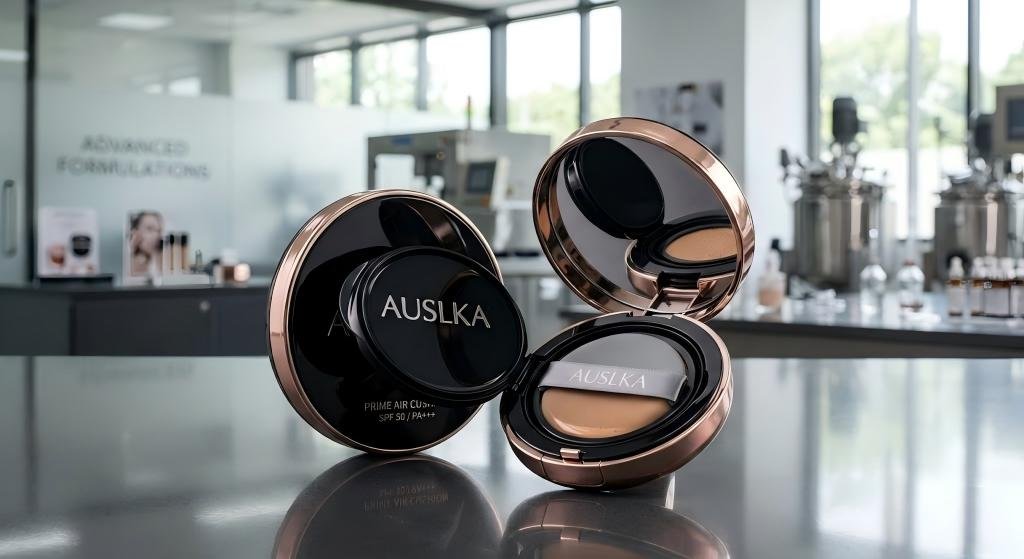
In the fiercely competitive landscape of modern color cosmetics, independent brands are continuously plagued by severe biochemical and structural product failures. Catastrophic foundation oxidation, inaccurate shade matching across diverse skin tones, and inherently drying textures frequently result in devastating consumer rejection. To systematically eradicate these aesthetic and mechanical liabilities, partnering with a premier OEM to develop a highly stable private label air cushion foundation is the definitive engineering solution for rapidly scaling beauty brands.
Traditional liquid foundations packaged in heavy glass bottles expose massive surface areas of the emulsion to atmospheric oxygen every time the pump is depressed. This continuous environmental exposure accelerates the degradation of volatile silicones and causes iron oxide pigments to shift in color—a phenomenon known as oxidation. The air cushion architecture mathematically solves this problem by suspending a highly calibrated, low-viscosity fluid inside a porous polyurethane matrix, completely shielding the formula from external thermodynamic stressors until the exact moment of application.
Developing this complex delivery system requires absolute mastery over emulsion physics and packaging engineering. In this comprehensive technical guide, we will aggressively deconstruct the physical properties of pigment micro-dispersion, evaluate the precise fluid dynamics required for sponge saturation, and detail exactly how partnering with an advanced Makeup ODM factory ensures your cosmetic line operates flawlessly across all global climates.
Core Micro-Dispersion & Textural Advantages

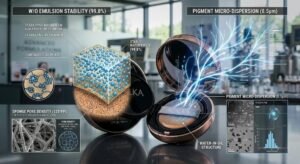
To objectively comprehend the performance superiority of a premium cushion compact, cosmetic chemists must deeply analyze the physics of pigment milling and the thermodynamics of Water-in-Oil (W/O) emulsions. An air cushion requires an exceptionally low-viscosity liquid foundation to properly saturate the internal sponge. However, reducing viscosity typically compromises coverage. To achieve high coverage within a thin fluid, a color cosmetics OEM must utilize advanced triple-roller mills and high-shear homogenizers.
This massive mechanical shear force crushes the titanium dioxide (TiO2) and iron oxide pigments down to sub-micron particle sizes (typically under 5 microns). Furthermore, these microscopic pigments are chemically treated—often coated with hydrophobic silanes or methicone. This advanced coating completely repels human sebum (facial oil) and prevents the pigments from agglomerating or oxidizing when exposed to the skin’s natural acid mantle. The result is a highly concentrated, ultra-fluid pigment suspension that delivers flawless, long-lasting coverage without the heavy, cakey texture associated with traditional liquid foundations.
Equally critical is the emulsion architecture. Premium cushion foundations strictly utilize a Water-in-Oil (W/O) or Water-in-Silicone (W/Si) emulsion system. By trapping microscopic water droplets inside a continuous external phase of volatile silicones (such as cyclopentasiloxane), the formula instantly imparts a cooling sensation upon contact with the epidermis as the water evaporates. The remaining silicone film cross-links to form a flexible, waterproof matrix over the skin, locking the micro-dispersed pigments perfectly in place while actively preventing trans-epidermal water loss (TEWL).
Critical Market Applications & Real-World Use Cases
The strategic deployment of the air cushion architecture is aggressively dictated by the modern consumer’s demand for high-speed, portable, and hygienic cosmetic application. In dense urban environments, consumers completely reject the messy, unsanitary process of dispensing liquid foundation onto the back of the hand and blending with external brushes. Consequently, global makeup brands utilize the compact delivery system to provide a self-contained, travel-ready solution that permits rapid, flawless touch-ups during transit.
Furthermore, professional makeup artists and dermatological clinics actively prescribe these specific formulations for post-procedure camouflage. Because the formulation is suspended within an antimicrobial sponge and applied via a non-absorbing applicator, the risk of transferring virulent bacterial colonies to compromised skin is mathematically minimized. Therefore, the architectural design of the compact directly enhances the biological safety profile of the cosmetic, making it a highly lucrative addition to any advanced Skincare Series targeting acne-prone or sensitive demographics.
Consequently, leveraging a sophisticated custom cosmetics manufacturing China supply chain allows independent brands to rapidly adapt to shifting global aesthetic trends. Whether a brand requires a hyper-matte, sebum-controlling formula for humid equatorial climates or a highly luminous, ceramide-infused formula for freezing winter environments, the ODM factory can instantly calibrate the W/O emulsion ratios. Therefore, by outsourcing this complex chemical balancing, founders can aggressively scale their SKUs without incurring the massive capital expenditure required to re-engineer fluid dynamics internally.
Comparison Table: Cosmetic Base Formats
To objectively evaluate the structural and operational viability of varying foundation formats, cosmetic engineers must critically analyze the mechanical deployment data. The following 4-column table mathematically contrasts Air Cushion Foundations against legacy cosmetic delivery systems across critical performance metrics.
| Cosmetic Format | Portability & Application Mechanics | Moisture Retention & Emulsion | Packaging Complexity & Assembly |
| Air Cushion Foundation | Supreme. Self-contained mirror, applicator, and fluid. Zero spill risk. | Excellent. W/O emulsion prevents evaporation; highly hydrating. | High. Requires precise sponge porosity, airtight gaskets, and ultrasonic welding. |
| Liquid Foundation (Glass Pump) | Poor. Heavy, fragile glass. Requires external brushes/sponges. | Good. Standard O/W or W/O emulsions, but oxidizes in the nozzle. | Low to Moderate. Standard glass molding and pump actuator assembly. |
| Pressed Powder (Compact) | Excellent. Highly portable, but prone to shattering upon impact. | Terrible. Strictly anhydrous (waterless); actively absorbs skin moisture. | Low. Requires heavy-duty powder pressing and metal pan gluing. |
| BB Cream (Plastic Tube) | Moderate. Lightweight, but messy dispensing. Cap can leak in transit. | Moderate. O/W emulsions are common; less stable than cushion fluids. | Very Low. Standard plastic tube extrusion and heat sealing. |
Assembly Best Practices & Packaging Specs
Executing a flawless commercial launch of a cushion foundation requires absolute adherence to mechanical packaging tolerances. The internal fluid is packed with highly volatile silicones designed to evaporate rapidly upon skin contact. If the compact casing is not engineered with an absolute hermetic seal, these silicones will prematurely flash off inside the packaging, leaving the internal sponge bone-dry and the product completely ruined before the consumer even opens it. Therefore, a premier liquid foundation factory must utilize high-precision injection-molded ABS or PET plastics equipped with specialized silicone or nitrile O-ring gaskets inside the primary snap-closure lid.
Furthermore, the selection of the internal saturation matrix (the sponge) is a critical exercise in fluid dynamics. The factory must mathematically match the pore density (PPI – Pores Per Inch) of the polyurethane sponge to the exact rheological viscosity of the foundation formula. If the fluid is too thick or the pores too fine, the liquid will pool on top and fail to saturate. If the fluid is too thin, it will immediately leak to the bottom of the pan. Perfect calibration ensures the fluid is suspended uniformly via capillary action.
Finally, the application puff itself must be engineered using advanced non-absorbing Rubycell (polyurethane) technology. Unlike cheap latex sponges that greedily absorb and waste expensive product, Rubycell possesses a microscopic closed-cell surface structure. It picks up a precise, micro-dosed amount of foundation from the cushion and deposits 99% of it directly onto the epidermis. Additionally, these puffs must be treated with broad-spectrum antimicrobial agents during the manufacturing phase to permanently prevent the cultivation of virulent bacterial colonies caused by repeated contact with the human face.
Frequently Asked Questions (FAQ)
- How does the OEM factory ensure accurate shade matching across diverse skin tones?
Advanced cosmetics manufacturers utilize precision spectrophotometers to mathematically map the specific wavelength reflectance of human skin. By strictly controlling the exact gravimetric ratios of red, yellow, and black iron oxides against a pure titanium dioxide white base, the factory guarantees absolute batch-to-batch color consistency without any visual deviation.
- Can I integrate high SPF sun protection into my private label cushion foundation?
Yes, but it introduces severe chemical complexities. High concentrations of physical UV filters (Zinc Oxide and Titanium Dioxide) are incredibly dense and prone to agglomeration (clumping). The OEM factory must utilize intense high-shear homogenization to ensure these heavy UV filters remain permanently suspended within the low-viscosity fluid without clogging the pores of the internal polyurethane sponge.
- Are refillable compact designs available for eco-conscious beauty brands?
Absolutely. Premium cushion architectures are specifically engineered as a two-part system: a durable, high-aesthetic outer master case and an airtight, disposable internal cartridge. This allows brands to aggressively market eco-friendly, lower-cost refills, significantly reducing virgin plastic consumption and vastly increasing customer retention and lifetime value (LTV).
- What preservative systems are required for a product that is constantly touched by a sponge?
Because the internal sponge is repeatedly exposed to atmospheric bacteria and human sebum via the applicator puff, the liquid formula must contain a highly aggressive, broad-spectrum preservative matrix. Factories frequently utilize synergistic blends of Phenoxyethanol, Ethylhexylglycerin, and Caprylyl Glycol, rigorously validated through 90-day microbiological Challenge Testing (PET) to guarantee complete pathogenic neutralization.
- Can I use a standard liquid foundation formula inside a cushion compact?
No. Pouring a standard, high-viscosity liquid foundation into a cushion sponge will result in catastrophic mechanical failure. The fluid will simply sit on top of the sponge, unable to penetrate the polyurethane matrix via capillary action. Cushion formulas must be specifically chemically engineered with drastically lower rheological viscosity to function correctly within the packaging.
- What is the standard Minimum Order Quantity (MOQ) for custom air cushion foundations?
Because the packaging assembly is highly complex (requiring automated sponge saturation, ultrasonic welding, and precise gasket alignment), MOQs are typically higher than standard liquid bottles. For private labeling existing formulas with custom-printed compacts, MOQs generally start between 5,000 and 12,000 units per shade, ensuring the factory can efficiently run the automated assembly lines.
Conclusion
The engineering reality within the color cosmetics sector is undeniable: attempting to launch a complex fluid delivery system without the massive technological infrastructure of a professional manufacturing partner guarantees catastrophic product failure. By migrating your brand’s production to a precision-engineered air cushion foundation developed by an elite ODM facility, you permanently mathematicalize your product’s structural stability, aesthetic superiority, and market readiness. You guarantee absolute hermetic sealing, perfect micro-dispersion, and rapid speed-to-market.
Do not compromise your brand’s reputation with unstable emulsions or leaking packaging. Whether you are expanding a high-coverage Makeup Series or seeking an advanced manufacturing partner to formulate a specialized Anti-Acne Series BB cushion, explore the immense capabilities of our GMPC-certified infrastructure. To understand our rigorous quality control protocols, visit About Us. Secure your commercial dominance by upgrading your supply chain today. Contact the formulation engineers at Auslka to receive a customized thermodynamic packaging audit, and fundamentally revolutionize your cosmetic brand’s trajectory.